Desert island album: The Cure’s Disintegration
The Cure’s Disintegration earns its four sides: the long intros, the dead center of the sequencing, and what to check on a real 1989 pressing.
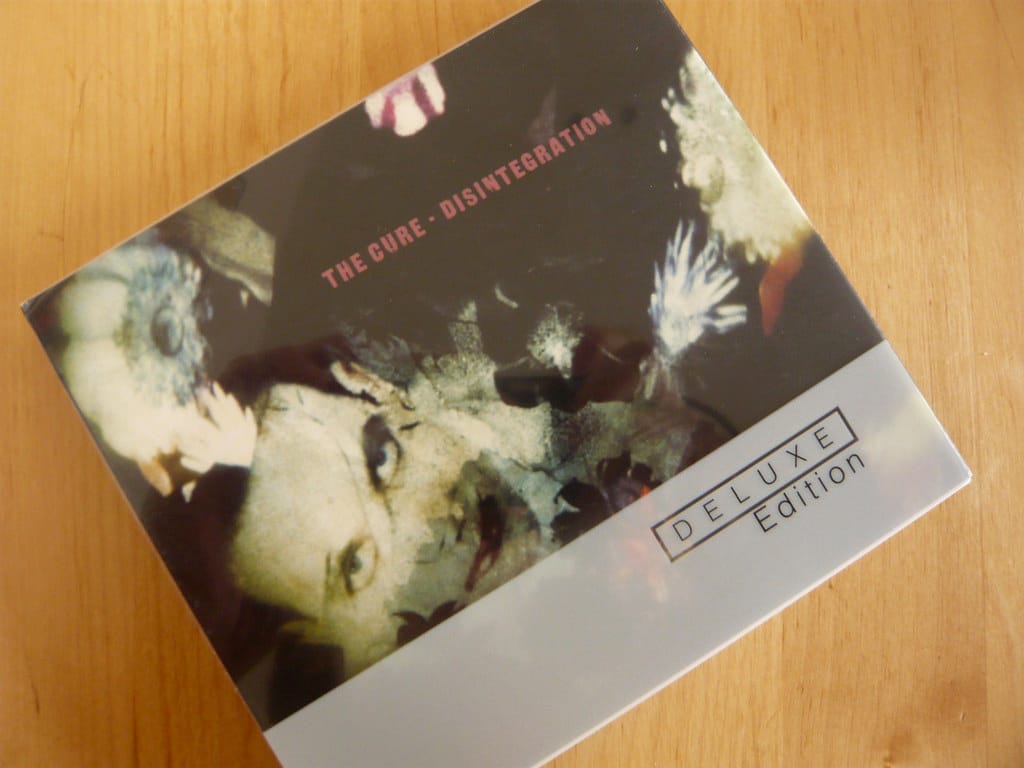
Disintegration doesn’t open so much as it arrives.Plainsong spends close to two minutes letting a synth pad and a glass-chime hook build before Robert Smith says a single word , and that delay is the whole argument for taking this record to a desert island. It’s an album built for someone with nowhere else to be.
Smith was turning thirty when The Cure made this one, and by his own reported account he wanted to drag the band back toward the long, suffocating atmosphere of Pornography after the chart-friendly sprawl of Kiss Me, Kiss Me, Kiss Me . What he got instead is something better than either: pop songcraft (Lovesong, Pictures of You) stretched out to the length and patience of a side-long dirge, with Boris Williams’ drums mixed far back and Roger O’Donnell’s keyboards doing the work a guitar usually does.Dave Allen produced it with Smith , and the whole record sounds like it was mixed in a room with the lights off.
On a desert island you live with sequencing, not singles, and this is where the double LP format does something a CD can’t replicate. Side one runs Plainsong into Pictures of You into Closedown, three songs that never raise their voice, so by the time the needle hits the runout groove you’ve already recalibrated your ears to the album’s actual volume. Side two is the closest thing to a pop run the record allows, Lovesong and Last Dance carrying real hooks before Lullaby drags you back under with that nursery-rhyme menace in the bassline. Side three is the engine room: Fascination Street and Prayers for Rain are the two tracks that do the most physical work on the whole album, and flipping the record here instead of streaming straight through forces a breath you didn’t know you needed.Side four closes with the title track and then Homesick and Untitled, which only really earn their keep around the third or fourth year of ownership, once you’ve stopped waiting for a chorus and started listening to what the strings are doing underneath .
Nobody needs convincing that Lovesong works after one play. Untitled is the one that takes patience, a seven-minute fade that sounds like nothing until you’ve heard the rest of the record enough times to know exactly what it’s fading from.
If you’re hunting a real copy, start with weight and smell.A genuine 1989 Fiction pressing in the UK (catalog FIXH17 ) comes in a thick gatefold with poly-lined inner sleeves, and the shrink wrap on a sealed original still gives off that faint plastic-and-cardboard smell that a shrink-wrapped reissue somehow never quite matches.The US Elektra pressing runs a touch lighter and brighter in the top end, a difference you’ll hear clearly on the chimes in Plainsong if you have both on hand. Check the dead wax the way we always do, the matrix etchings tell you more in three seconds than a sticker on the shrink ever will, and if you want the full walkthrough on how to read those runout numbers we already covered it in the dead wax numbers we covered before.Later reissues, including the 2010 remaster , tighten the low end and lose some of the murk that makes the original mix feel like it’s underwater, which on this particular record is not an improvement.
Disintegration earns the double-LP format the same way Sonic Youth’s sprawl does, where the extra sides aren’t padding, they’re the point; we made that case for another double LP that earns the walk and the logic holds here too. A desert island record has to survive five hundred plays without turning into wallpaper, and the trick with this one is that it refuses to be background no matter how many times you’ve heard it; the long intros make sure of that every single time.
What’s yours?