Take On Me wasn’t CGI. It was 3,000 hand-inked pencil frames
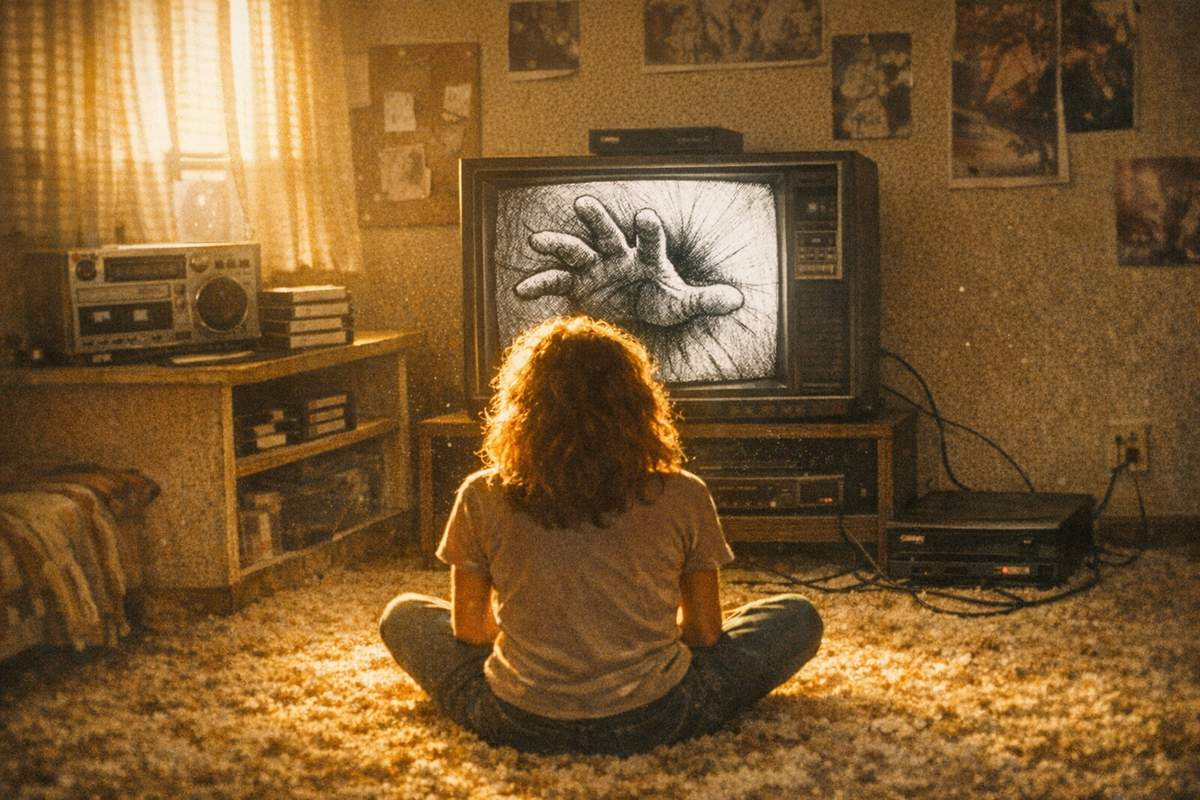
You’ve seen the moment a thousand times: Morten Harket’s face flickers from live film into a scratchy pencil sketch and back again, mid-song, mid-motorcycle-chase-through-a-comic-book. Every kid who caught it on MTV in 1985 assumed the same thing. Computers did that. Nobody assumed graphite and a light table.
They were wrong, and the actual method is older than any of them.
Rotoscoping means tracing over live-action film, frame by frame, to produce drawn animation that moves with real human weight.Max Fleischer patented the process back in 1915 , and it’s the reason early Fleischer Studios cartoons like Betty Boop and Superman had that eerie, too-fluid walk cycle. Ralph Bakshi leaned on it hard for his 1978 Lord of the Rings, projecting battle footage onto animation cels and tracing knights and orcs right over real actors in costume. Disney used it sparingly too, for reference on Snow White’s dance moves. It was never new. It was just expensive and slow enough that most productions avoided it.
Take On Me’s video, directed by Steve Barron , leaned into that slowness on purpose. The band shot live-action footage first, standard film, standard studio.Then animators Mike Patterson and Candace Reckinger took individual frames and inked them by hand on paper, one drawing per frame, chasing the exact contour of a jawline or a raindrop on a window before moving to the next sixtieth of a second.The finished video reportedly used over 3,000 separate drawings to cover roughly two and a half minutes.
That’s not a rounding error. That’s a stack of paper an inch thick, each sheet holding one blink of an eye.
You can feel the process in the texture if you look close. Real rotoscope work carries the tremor of a human hand: a line that overshoots slightly, a smudge where graphite dragged, a jitter frame to frame because no two tracings land in exactly the same spot. That instability is the whole appeal. It reads as alive in a way vector-smooth animation never does, because it’s not simulating unpredictability, it’s recording it.
Which is exactly why nobody’s nailed that specific look since, despite every music video director since 1985 wanting to.
Modern rotoscope tools, the roto brush in After Effects, AI-assisted tracing, digital tablets that auto-smooth your stroke, all solve for consistency. They remove the tremor on purpose, because tremor used to mean wasted frames and reshoots. But removing the tremor removes the thing that made the original video feel handmade instead of processed. Patterson and Reckinger weren’t fighting their tools to get a clean line. The mild imperfection of pencil on paper, photographed under inconsistent studio light, frame after frame after frame, is not a bug any software has bothered to replicate, because nobody builds software to be worse on purpose.
There’s also the matter of time.A small team spent something like sixteen weeks hand-inking that footage before digital shortcuts existed to compress the job. Try pitching that schedule to a label today and see how far you get.
The video picked up six MTV Video Music Awards in 1986 , which is a lot of hardware for something built mostly out of pencils and patience. Worth remembering next time somebody calls it an early CGI experiment. It’s the opposite of that. It’s one of the last big rotoscope jobs done the hard way, right before the industry found faster ways to fake the same trick badly.
Next week: the other 1985 video that everyone remembers wrong, and what was actually happening in that green room.