The family stereo came with rules nobody wrote down
The family stereo lived in the living room with one good pair of speakers and rules nobody dared say out loud. Here's what that first needle drop felt like.
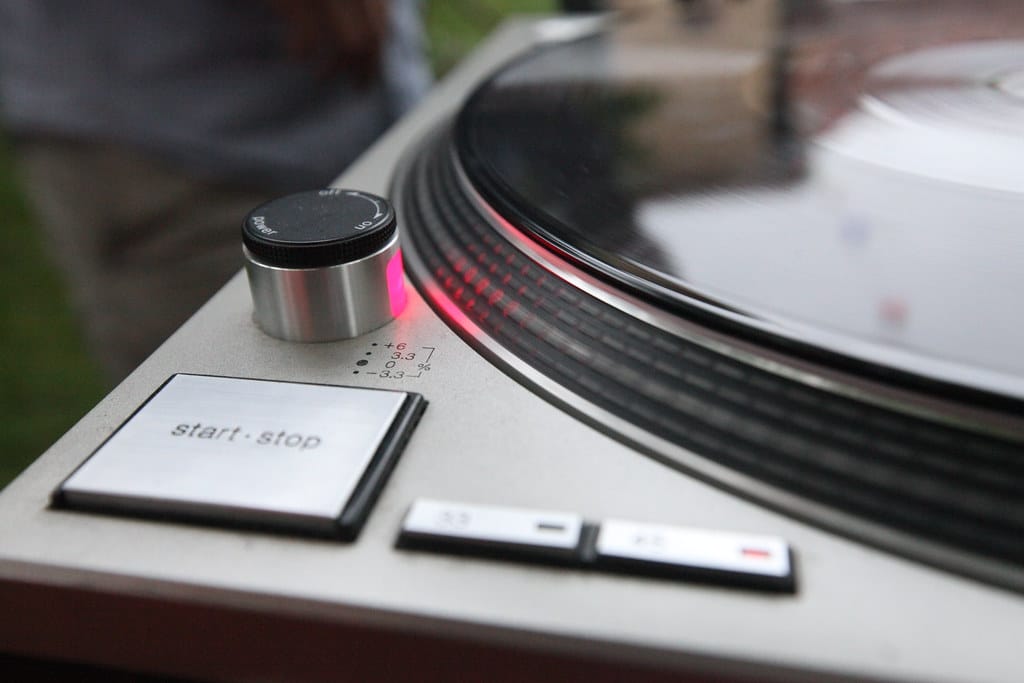
The family stereo sat in the same spot in every house on the block: a low wood cabinet or a particleboard shelf unit, receiver on top, turntable under a hinged dust cover, and exactly one pair of speakers that actually mattered. Everything else in the house made noise. This made sound.
Nobody in the family ever sat you down and explained the rules. You learned them the way you learned not to touch the stove, which is to say once, and hard. Don't set a glass on the receiver, because condensation finds circuit boards. Don't touch the tuning dial once the station is locked in, because somebody spent ten minutes getting that AM signal clean for the ballgame. And under no circumstances do you drop the needle. You cue it. There's a difference, and everyone in the house except you already knew it.
The receiver itself was a small altar.Maybe a Pioneer SX-series, maybe a Marantz, maybe something from Sears with a walnut veneer shell and a power meter that swung like a tiny green metronome . The tuning dial glowed amber behind glass. The volume knob had actual resistance, a real detent you could feel click past under your thumb, nothing like the plastic stuff in your bedroom clock radio.
And there was one good pair of speakers. Not two pairs, not a set for every room. One pair, usually oversized, usually planted a specific and non-negotiable distance apart, because somebody had read that this mattered for the stereo image and was not going to be talked out of it. Move a speaker three inches to make room for a Christmas tree and you'd hear about it.
The turntable lived under its own hinged lid, and that lid had its own etiquette. You closed it gently. You never let it slam, because slamming jarred the tonearm, and a jarred tonearm meant a skip, and a skip on somebody's original pressing was a five-alarm household event. The cueing lever was the whole point of the machine: you lined the needle up over the lead-in groove, pressed the lever down, and the arm lowered itself in a slow mechanical exhale, no human hand required to actually touch vinyl to vinyl.
Getting handed that lever for the first time felt like getting handed car keys. Somebody stood behind you, arms crossed, watching your hand shake slightly as you set the needle over the first track and not, God forbid, three grooves in where you'd land in the middle of a verse. You held your breath until the needle settled and the first crackle of surface noise came through the speakers, and only then did the adult in the room relax enough to walk away.
The stakes were real, and that was the whole education.A scratched record wasn't a streaming glitch you shrugged off; it was a physical wound on an object that cost real money , and everybody in the house knew exactly whose fault a new scratch was. That pressure taught you to handle vinyl by the edges before anyone ever told you to. It taught you patience with a tonearm long before patience was a virtue anyone praised you for.
It also meant the living room stereo was a shared resource with a queue. Your dad's Sunday routine owned that turntable for two hours, whatever it was, Sinatra or Creedence or a scratchy comedy record from 1968. You waited. You did homework on the floor with your back against the speaker cabinet, close enough to feel the bass in the carpet, and you learned every one of his records before you owned a single one of your own.
The rules never got written down because they didn't need to be. You broke one exactly once, and the silence that followed taught you faster than any lecture could have.
What was the first record you were trusted to play by yourself, and did you actually cue it right the first time, or are you still lying about that?