Reading dead wax: the three-second first-pressing check
Dead wax under a lamp beats the sleeve every time. How to read matrix etchings, stamper suffixes, and catch a reissue posing as first pressing.
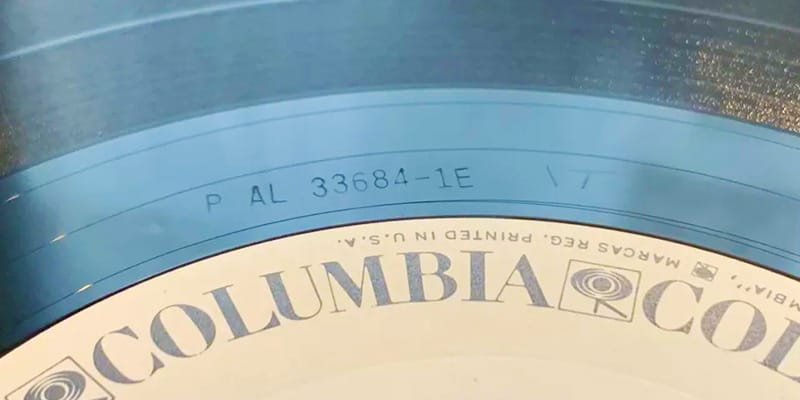
Before you flip a record over to check the labels, flip it under a lamp and look at the dead wax. That blank-looking ring between the last groove and the label is where the truth lives. Everything printed on the sleeve is marketing. Everything scratched into the runout is a fingerprint.
The matrix number - sometimes called the runout etching - is the pressing plant's own paperwork, cut or stamped directly into the lacquer before the record ever became a record. It usually strings together a catalog number, a side designation, and a suffix that tells you which stamper made this exact copy. Two LPs with the identical label, same catalog number, same year printed on the jacket, can carry completely different matrix suffixes - which means one of them is not what the seller says it is.
First move: stamped or etched. Etched runout looks hand-scratched, often at an angle, sometimes with a flourish or initials from the cutting engineer - that is a lacquer cut by a person, usually an earlier and more direct generation. Stamped runout looks mechanically uniform, punched in by machine, no variation in depth or pressure. Neither one automatically wins, but a reissue claiming to be an original often shows stamped uniformity where the era's actual first pressings show hand-etched work. Tilt the vinyl, catch the light at a raking angle, and read it like a scar.
Second move: the suffix chain. Matrix numbers frequently end in a dash and a number - -1, -2, -A1, -B2 - and that is the stamper generation, not the pressing generation people assume it is. A -1 doesn't automatically mean first pressing; it means first stamper pulled from that particular mother. Plants ran multiple stampers off the same mother simultaneously for high-demand titles, so a -1 and a -3 can be the exact same week of production, same sound, same everything but the stamper that touched them.Where the suffix actually matters is cross-referencing it against a discography database that's already mapped which suffix corresponds to which pressing run - .
Third move, and the fastest: compare the matrix number to the catalog number on the label and jacket. They should relate but rarely match exactly - the catalog number is what the label printed for retail, the matrix is what the plant etched for its own tracking, and a legitimate original will show a sensible relationship between the two once you know the label's numbering conventions. A reissue lying about its vintage often gets sloppy here, printing an original-era catalog number on the sleeve while the runout carries a matrix prefix that didn't exist until a later reissue campaign. That mismatch is the three-second check: sleeve says one era, wax says another, argument over.
Run this on something you already own. Pull a record you're sure is an original - say a domestic pressing from a label whose reissue history you know cold - and just read the runout without looking anything up first. Notice the depth of the etching, the spacing, whether it looks like a person did it or a machine did it. That baseline in your hand is worth more than any forum thread, because now you know what the real thing feels like under your thumbnail.
Plants also stamped country and pressing-plant codes into the deadwax - a small logo, a set of initials, sometimes a mastering engineer's stamp like the small Porky Prime Cut etchings that collectors specifically hunt for on UK pressings. Once you know your target label's plant habits, these become as diagnostic as the matrix number itself. A copy missing a plant stamp that every genuine original carries is telling you something, whether or not the rest of the record looks right.
None of this replaces knowing the label's actual pressing history - what plant cut what year, which countries got which stampers, when the jacket art changed. But the runout groove is where a reissue can't quite finish the lie, because whoever cut it either had access to the real lacquer lineage or didn't. Next time you're at a shop with a stack of maybes, skip the front cover argument entirely and go straight to the wax.
What's the weirdest matrix marking you've ever found staring back at you in the light?