The band shirt poser test: name three songs or take it off
Wearing a band shirt to school meant somebody would test you. Here is how the poser test actually worked, and why the tour shirt always won.

Somebody always did it by the lockers, never in class where a teacher might hear. You wore the shirt, he clocked it before the bell, and the question came flat and fast: name three songs. Not your favorite song. Three. The distinction mattered more than anything a teacher tried to teach you that day.
The rule had no author and no written text, but everybody knew it cold. A Metallica shirt got you Metallica questions. An Iron Maiden shirt got you a pop quiz on which album had the guy in it (all of them, that was the trick question, Eddie is on all of them). Fail and the shirt didn’t come off your back literally, but it came off you socially. You were the guy who bought the shirt at the mall because it looked cool, and everyone recategorized you in about four seconds.
The test existed because the shirt was a claim, and claims got audited. Nobody quizzed you on your Trapper Keeper. But a shirt said I know this band in a way that invited a follow-up, and the follow-up always came from someone who had actual skin in the game: an older sibling’s tape collection, a subscription to a magazine with newsprint that rubbed off on your fingers, real hours logged with headphones on in a dark room.
The genius and the cruelty of the test was that it filtered for time spent, not money spent.A shirt from Merry-Go-Round or Spencer’s cost the same twelve or fourteen dollars whether you’d owned the album since it came out or bought the shirt that weekend because you liked the graphic. The interrogation was the only mechanism anyone had to sort the two apart, and it worked because everyone had already been tested themselves at some point and remembered exactly how it felt to blank on question two.
Then there was the shirt that made you untouchable, and everyone knew that one too: the shirt from the actual show. Tour dates on the back, city and venue in that cramped list font, maybe a smudge of somebody’s beer or a rip at the hem from the pit. That shirt didn’t get quizzed. It got asked about differently, quieter, almost respectful: you were there? That question had no wrong answer as long as you actually had the ticket stub to back it up, which somebody usually did, folded soft in a wallet for way longer than made sense.
The economics of the tour shirt made it rarer currency too. You could only get it if you’d gotten a ride, gotten permission, gotten past whatever obstacle stood between you and an actual arena or a club that smelled like flat beer and cigarette smoke on the walls before you even lit one yourself, the way we talked about in the first concert was never really about the band. The shirt was proof of the whole chain of events, not just the purchase.
Some kids gamed the system anyway. You learned three songs off the radio hit and the deep cut everyone name-checked in Circus or Hit Parader that month, and that got you through most interrogations because most interrogators weren’t exactly scholars either. The real test, the one that actually separated people, was what happened when somebody asked a fourth question you hadn’t prepped for. That’s where the bluffing collapsed, usually into a mumbled “I mostly know the one on the radio” and a very long walk to homeroom.
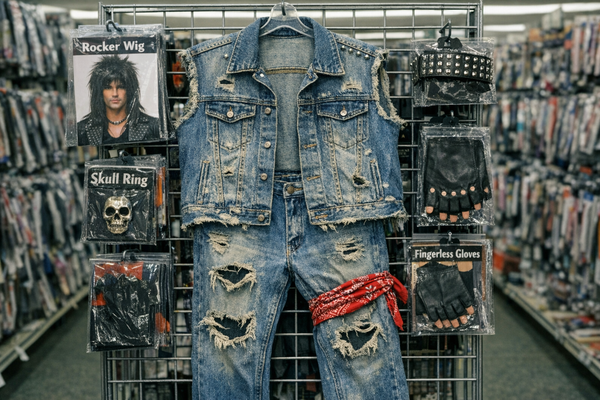
Nobody wrote these rules down and nobody needed to. You absorbed the whole code just by watching it happen to somebody else first, the same way you learned which homemade patches belonged on a jacket and which ones marked you as trying too hard, a whole unspoken hierarchy we got into with the battle jacket that was never finished. The shirt and the jacket ran the same test: does this object match the hours you actually put in.
Which side of the poser test did you land on, and do you still remember the exact shirt that got you quizzed?