The math you did in your head before you dubbed a mixtape
You did track-time addition on the album sleeve so side one wouldn't chop your favorite song's chorus off at the ninety-minute mark.
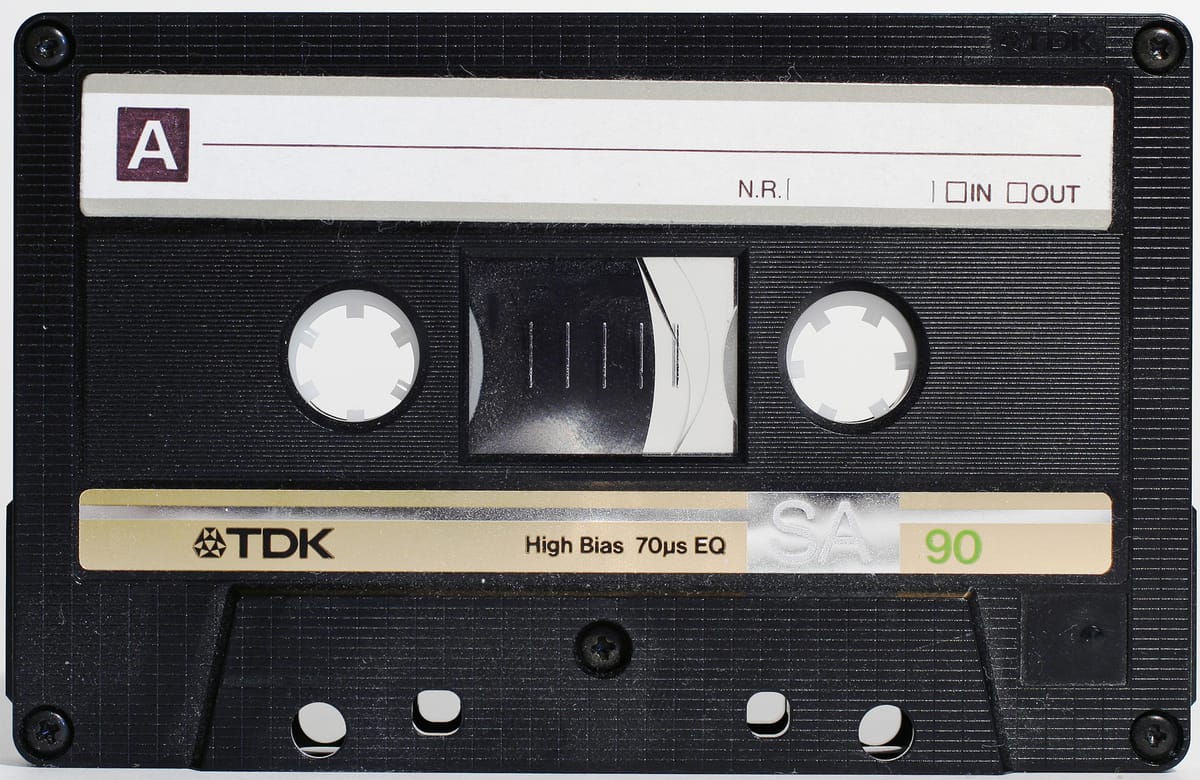
You had a Maxell XLII-S90 or a TDK SA90 in the shrink wrap, forty-five minutes a side, and an album you loved that ran forty-eight minutes on side one alone. That gap did not resolve itself. You solved it with a pencil, the back of the album sleeve, and whatever math you still remembered from school.
The album sleeve had the numbers already, printed in tiny type next to each track: 3:47, 4:12, 2:58. Some people flipped to the inner sleeve where the times ran down the side like a grocery list. You added them up by hand or, if you were lucky enough to have one lying around, punched them into a pocket calculator that converted seconds into minutes wrong half the time and made you redo it anyway.
Then came the actual decision: what goes on side A and what gets pushed to side B. This wasn't just about fitting songs, it was about protecting the ones that mattered. Nobody wanted the song they were making the tape for to get chopped off mid-chorus because they miscounted by ninety seconds.
So you built in insurance.Cassette manufacturers rated a C90 as ninety minutes, but the actual tape length ran a hair over on purpose , which gave you a small cushion nobody advertised and everybody relied on. Still, you never trusted the cushion completely. You left yourself two or three minutes of blank tape as a buffer, dead air you'd rather waste than lose the last verse of something you cared about.
Here's the part that actually saved tapes, the trick that doesn't get talked about enough: you put your least essential song last on the side. Not your favorite, not the deep cut you were proud of finding, but the throwaway. The album track everyone skipped anyway, or the song you already had on three other tapes. If your math was off by forty seconds, that song got the amputation, not the one you'd rewound fifty times.
This sounds obvious once you say it out loud, but it took most people a few ruined tapes to learn it the hard way. You'd queue up a mix for a long drive or a girl or just yourself, get to track nine on side A, and the motor would keep turning while the sound just stopped, tape hiss where the last thirty seconds of a song used to be. Once was enough. After that you planned the sacrifice in advance.
The tape counter helped a little, those three or four digit mechanical numbers spinning behind the little window, but it lied constantly. Counter numbers depended on how much tape was wound onto which reel, so 120 on a nearly full reel meant something completely different than 120 near the end. You learned to treat the counter as a rough guide, not gospel, the same way you learned not to trust the volume knob's marked numbers to mean the same loudness twice.
Some people solved the whole problem by hunting down 100-minute or 110-minute tapes, the Maxell XLII-S110 and similar oddities that ran longer than the C90 standard but were thinner stock and more prone to stretching or eating themselves in a cheap deck . Using one felt like cheating in a good way, like finding a loophole nobody at the record shop counter mentioned.
The click of the cassette door closing after you'd finally nailed the math, satisfied you'd gotten every song you wanted onto two sides without sacrificing anything you loved, was its own small reward. You'd done actual arithmetic to make a mixtape. Nobody made you. That was the whole point.
Did you ever lose a song to bad math, or did you master the sacrifice-track trick early? Next week: why dubbing off vinyl always sounded better than dubbing off another cassette.