Someone else’s name on the back cover
A price sticker from a dead record store, a ballpoint name, a ticket stub inside the sleeve: why the marked-up copy sometimes beats the clean one.
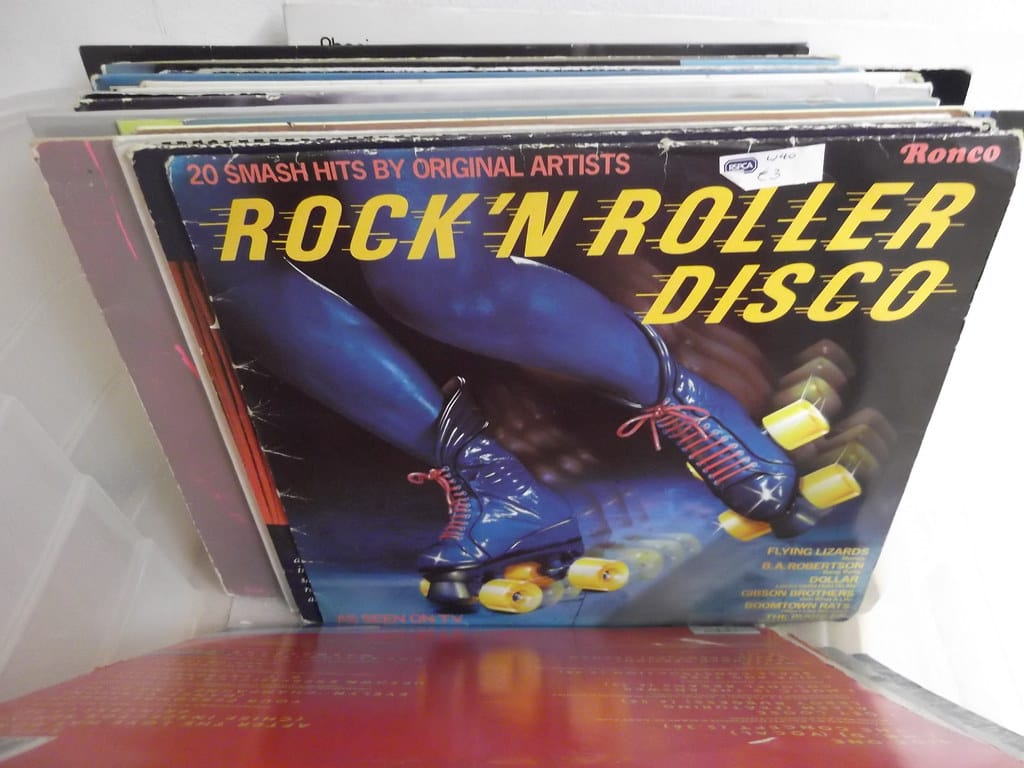
Flip the gatefold over and there it is: a name in blue ballpoint, upper right corner, the ink gone a little brown at the edges. Someone wrote their name on a record so it wouldn’t walk off at a party in 1979. It worked, more or less, for forty-some years, which is longer than most friendships.
You find these things in the two-dollar bin and the glass case both, and they change what a record is. A clean copy is just a pressing. A marked one is an artifact with a chain of custody, even if the chain has exactly one visible link.
The price sticker is the easiest tell to date. A hand-torn circular sticker that says $6.98 in that specific dot-matrix font puts you somewhere in a mall chain, not an indie shop, and if the store name printed underneath is one that folded decades ago, you’ve got a little obituary stuck to a Steely Dan record. Peaches, Cellar Records, Licorice Pizza: shops that don’t exist anymore but left their fingerprints on stock that outlived them.
Cutout notches tell a different story, the sad one. A triangular notch or drilled hole through the corner of the jacket means a distributor marked this copy as unsellable at full price, dumped stock cleared out to a rack by the register. It didn’t sell the first time either. Somebody bought the failure, and now the failure is worth more than the hit because it’s scarcer.
Ticket stubs are the good ones. A movie ticket used as a bookmark in a gatefold, dated, priced at $4.50, tells you what theater was down the street from whoever owned this record and roughly what year they were flush enough to catch a show. It’s not evidence of anything important. It’s evidence of a Tuesday.
Handwriting inside the sleeve is its own category of tell. Not the owner’s name this time, but track lists scrawled for a mixtape, or a phone number with no name attached, or the word ‘side 2 skips’ underlined twice like a warning left for the next owner. Somebody sat with this record long enough to leave notes. That’s not damage. That’s annotation.
Collectors will argue that condition is condition and a Discogs grade doesn’t care about sentiment, and technically they’re right. A VG+ with a name on it still grades VG+. But go watch what actually happens in a shop when two copies of the same pressing sit side by side, one pristine and blank, one with a shop sticker from a store that closed before the buyer was born. The second one sells first, and usually for more, because the buyer isn’t just purchasing vinyl. They’re purchasing a small, unverifiable story, and people will pay a premium for a story even when they can’t confirm a word of it.
Part of it is just the smell, honestly. Old cardboard holds basement and cigarette smoke and somebody’s house in a way new shrink-wrap never will, and that smell hits before you’ve even read the sticker. The provenance sells the nose before it sells the brain.
There’s a darker read on all this too, worth saying out loud: sometimes the record outlived the person who wrote their name on it. Estate sales move a lot of vinyl, and a fair number of those ballpoint names belong to someone who isn’t collecting anymore, full stop. You don’t need to get maudlin about it in the shop. But it’s worth knowing what you’re actually holding when the ink looks that old.
None of this is on the price guide. It can’t be, because it’s not reproducible: nobody can manufacture a 1994 shop sticker or a stranger’s handwriting to order (well, nobody honest). That’s the whole appeal. The clean copy is a product. The marked one is a used object that happened to hold music, and it comes with a previous owner you’ll never meet but somehow still know something about.
Next time you’re digging through a bin, check the back cover before you check the vinyl. What’s the strangest thing you’ve ever found tucked inside a sleeve?