September 24, 1991: the day nobody knew what they had
Nevermind hit store bins on Sept 24, 1991 with zero fanfare, $8.99 sticker, no line out the door, before it ate the world.
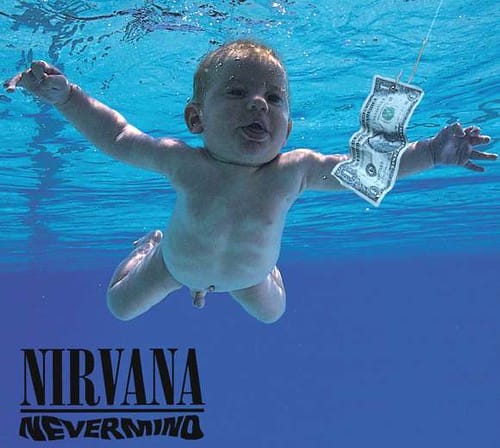
Nobody lined up. That part gets lost.On September 24, 1991 , Nevermind went into record store bins the same way any other DGC release did that week, no midnight countdown, no line out the door, just a new spine among the other new spines.
You maybe heard about it from a friend who had a promo cassette or a copy dubbed from someone whose older sibling worked at a radio station. Or you saw the cover in the new-release rack, a naked baby swimming toward a dollar bill on a fishhook, and you thought that was a strange thing for a band to put on a record, and you bought it mostly because the cover made you curious and the sticker said only $8.99 .
The cassette came in that thin plastic bag record stores used, the one that stuck to itself with static and smelled faintly like the shrink wrap it just came out of. You peeled the cellophane off in the car, maybe before you even started the engine, because you weren’t going to wait until you got home.
Smells Like Teen Spirit was already getting spun, but nobody on the radio was treating it like a moment yet. It slotted in between whatever else was on the playlist that month, and if you didn’t know to listen for it, you might have let it pass as just another loud song with a good hook.
Then you flipped the tape over, or you didn’t, because side one alone rearranged something in you. In Bloom, Come as You Are, Lithium, one after another, and none of it sounded like it was trying to be a single. It sounded like a garage band that had somehow gotten a real budget and refused to clean up on the way in.
For a few weeks it stayed yours. That’s the part worth remembering honestly, not the part where it became the biggest thing in the country. You’d play it for someone and watch their face not quite get it yet, and you’d feel like you’d found something in a bin that the rest of the world hadn’t caught up to.
Then the video hit heavier rotation. Then the janitor and the cheerleaders and the guy in the wheelchair were suddenly everywhere, on channels you didn’t associate with music like this, and the song started showing up at parties thrown by people who three months earlier were only playing hair metal off cassette. That was the sting. The record didn’t change. Your ownership of it did.
By January , it had knocked Michael Jackson’s Dangerous out of the top spot on the Billboard 200 , which is the kind of detail that sounds impressive in hindsight and felt almost wrong at the time, like watching something private get put under stadium lights. You didn’t begrudge the band the money or the fame. You just missed the version of the record that only a few people you knew had heard.
There’s a particular flavor of loss that only applies to art you found early, before anyone told you it mattered. You don’t get it back by playing the tape again, and you don’t get it back by explaining to somebody younger what it was like. The tape still works, the hiss under the quiet parts is still there if you kept the original dub, but the secret is gone and it isn’t coming back.
Where were you when Teen Spirit went from your song to everyone’s song, and do you remember the exact conversation where you realized it had already happened?