Appetite for Destruction: the cassette that changed its face
Some early Appetite for Destruction cassettes still hid the banned Robert Williams cover before Geffen swapped in the cross and skulls.
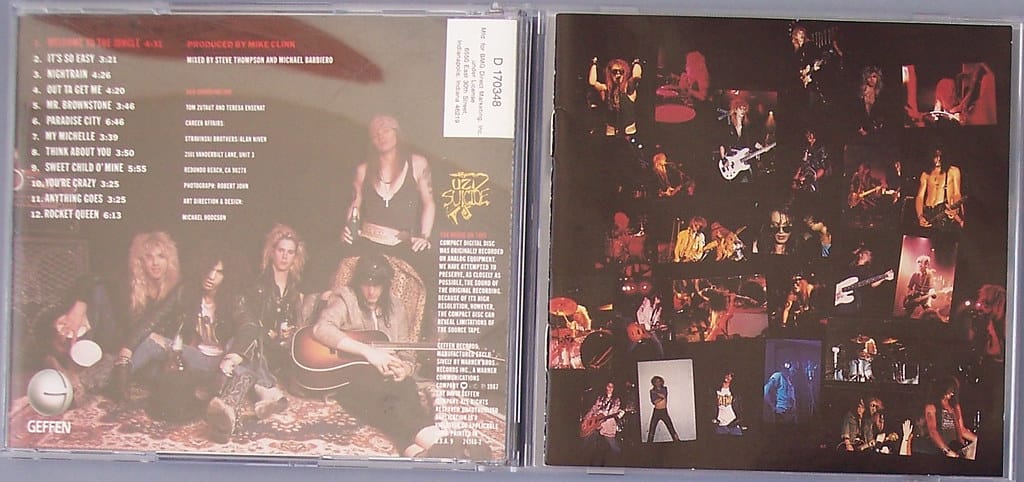
July 21, 1987 is the day Appetite for Destruction hit cassette shelves, and if you bought it that week, the J-card in your hand was already a compromise.
The original artwork was a Robert Williams painting, also called Appetite for Destruction, showing a robot assailant and the monster coming to exact revenge on it. Geffen used it as the album cover first. Major chains balked immediately — Kmart, Wal-Mart, and a long list of others said they would not stock it, full stop, no exceptions.
So Geffen blinked. The label swapped in the now-familiar image: a black background, a cross, and four skull-portraits of the band members ringed around it, credited to artist Billy White Jr.. The Robert Williams piece did not disappear, though — it got demoted to the inner sleeve on vinyl, tucked away where the kids who already owned it could still find it, and the offended parents mostly couldn’t.
Cassettes complicate this story in a way vinyl collectors love to argue about at record shows. A run of early tape copies shipped before the switchover was finalized, meaning some J-cards folded out to reveal the original Williams painting instead of the cross-and-skulls image. Not a bootleg, not a misprint — just a small window of pressing before Geffen’s damage control caught up with distribution.
That is the tape your older cousin might have owned. The one that came home in a Sam Goody bag in the summer of ’87, months before anybody was calling this the best-selling debut of the decade, back when it was just the loud record with the cartoonish cover that made the record store guy raise an eyebrow.
Twenty years later you find a copy at a garage sale, two dollars, a little sun-faded, Norelco case cracked at the hinge. You pop it open expecting the same shock of orange and violence you remember — and instead you get four skulls staring back at you from a black background. Same album.Same Geffen catalog number . Different cover entirely, because by the time that copy got pressed, the cross art was the only version anybody was manufacturing.
This wasn’t exclusive to cassette, either — the vinyl went through the identical bait-and-switch, and CD pressings from the era carry the same cross-and-skulls cover as standard. But cassette is where the timeline gets weirdest, because tape runs moved fast and cheap, meaning the crossover window between banned-cover copies and cross-cover copies was narrower and messier than it was for LP.
Pop a used copy open today and check the fold seam on the J-card before you even look at the front. Original Williams-cover cassettes have survived in small enough numbers that they trade for real money now, and the crease pattern combined with the Geffen print codes in small type on the inside fold tells you more than the cover art alone ever will.
The tape itself doesn’t care which cover it’s wearing. Side one still opens with that studio countdown into feedback, side two still flips at the same spot it always did, the pause button still needs a delicate touch if you’re trying to dub it clean onto a 90-minute Maxell. The music never changed. Only the face on the front did, and only because enough retailers decided a painting was more dangerous than the record itself.
Check your own copy. Fold seam, print code, cover art — which version is sitting in your collection right now?