Oxygene, 1976: the rig, the sales, and radio’s blank stare
Jarre built Oxygene alone on scavenged gear, no lyrics, no band photo, and it outsold French rock in 1976 while US radio just shrugged.

Pull the gatefold and there is no band photo. No liner note thanking the drummer, no lyric sheet, because there are no lyrics.Just a cracked planet on the cover and six untitled tracks named Oxygène I through VI, and somehow this thing outsold rock albums in France in 1976 .
Jean-Michel Jarre built the record largely alone, in a home studio , on gear he'd scavenged and modified rather than gear a label handed him. That distinction matters. This was not a session-musician synth record made with a rented Moog and a rented engineer — it was a guy patching cables in his own kitchen until something breathed.
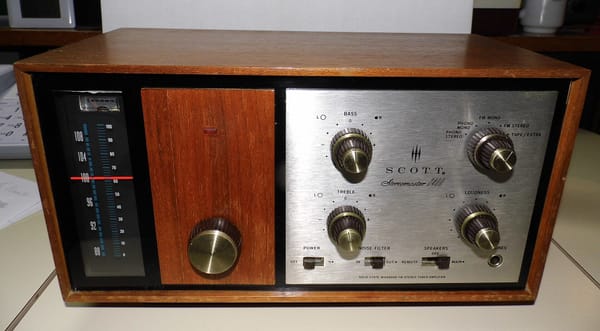
The core of the rig was the EMS VCS3 , the British suitcase synth with the pin-matrix patch bay instead of a normal panel — you set tone by plugging pins into a grid instead of turning knobs in a row, which is why VCS3 patches always sound a little unstable, a little alive, compared to the button-down precision of an ARP.Jarre also ran an ARP 2600 , a Mellotron for the choir-and-string pads that give the record its cathedral width, and an RMI Electra-Piano for the electric-piano runs. None of it was multitracked in a commercial facility with a 24-track Studer and a house engineer on the clock.Reports put much of it recorded direct to a much smaller home rig , which is part of why the album has that close, breathing-in-your-ear quality rather than a big studio sheen.
Oxygène IV is the track everyone knows, the one with the sequenced pulse and the melodic top line that sounds like a theme song for a movie that never got made.It's also the one that got trimmed into an edit for radio in some territories , because six-and-a-half minutes of synthesizer with no verse-chorus-verse structure was a hard sell to a format built on hooks you can talk over.That single edit did climb the charts in several countries — just not cleanly, and not in America the way it did in Europe.
American FM radio in 1976 ran on formats, and formats run on categories. AOR stations played album cuts, but album cuts by bands — guitars, a singer, a story you could follow even instrumentally, because you knew the players. Top 40 needed a hook with words in the first fifteen seconds. Disco was just catching fire and had its own rhythm section built around a four-on-the-floor kick, not a pulsing analog sequencer with no drummer at all. Oxygène didn't fit any bin, because it wasn't rock, wasn't disco, wasn't a novelty instrumental like a movie theme, and radio in 1976 didn't have a slot marked electronic.
It did eventually surface stateside — Billboard logged chart action for the album , and college and progressive-format stations picked up cuts the way they'd pick up a King Crimson instrumental passage, treating it as texture rather than a single. But there was no equivalent to what French and other European stations were doing, no format built for a record that asked you to just sit with a sound for six minutes.
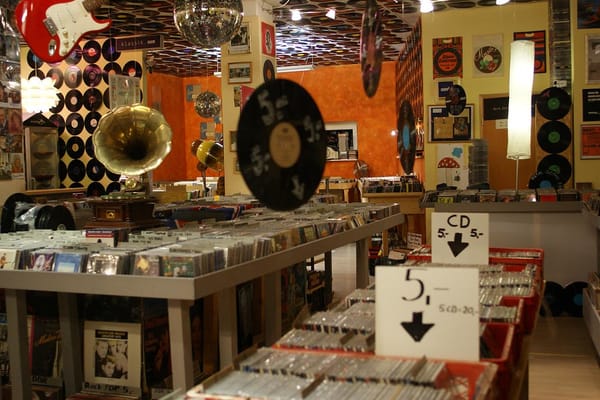
That gap is exactly why import copies of Oxygène moved through American record shops the way bootlegs did — passed hand to hand, played for a friend who didn't believe a record could sound like that, the shrink-wrap crackle giving way to a hiss of tape noise under the first VCS3 swell. You didn't need to know French to get it. You needed a friend with a copy and a turntable that could handle the low end without the needle jumping.
Next week: the Mellotron itself, and why a tape-loop keyboard built to fake an orchestra ended up defining a decade of sounds that weren't supposed to exist yet.