Maxell XLII vs TDK SA: what the bias switch really did
The Normal/CrO2/Metal switch nobody touched was the whole game. Here is why XLII and SA sound different and why your mixtapes got muddy.
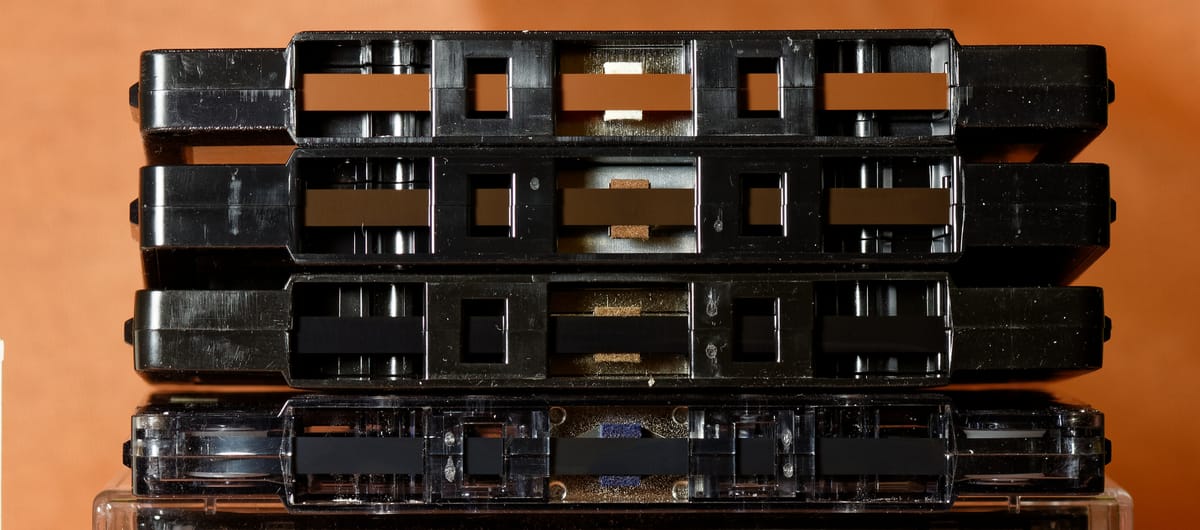
Everybody had an opinion and nobody could actually explain it. Maxell XLII people talked about warmth. TDK SA people talked about clarity. Both camps were describing the same switch on the front of the deck and neither one usually touched it.
That switch matters more than the brand. It’s labeled Normal/CrO2/Metal on some decks, I/II/IV on others, and it does two things at once: it sets the bias current the deck injects while recording, and it sets the playback equalization curve the deck reads back with. Get it wrong and the tape isn’t broken, the deck just made the wrong kind of recording on it.
Bias exists because magnetic tape is a liar at low signal levels. The oxide particles don’t respond in a straight line near zero, so a quiet passage gets smeared and distorted if you record it raw. Engineers fixed this by riding a high-frequency signal, well above what you can hear, on top of the music while recording. That inaudible carrier pushes the tape into its linear zone so the actual audio gets recorded cleanly. Too little bias and you get distortion and boosted highs. Too much and you lose top end and dynamics. Every formulation of tape wants a different amount.
Type I ferric tape (Maxell UD, TDK D) runs on the 120 microsecond playback EQ and low bias. Type II tapes - Maxell XLII and TDK SA both live here - want higher bias and the 70 microsecond curve. Type IV metal tape wants even more bias current still, and most consumer decks that supported it kept the 70 microsecond EQ but cranked the bias level higher again. The switch on the deck isn’t decoration. It’s telling the electronics which lie to compensate for.
Here’s where XLII and SA actually diverge.Maxell’s Type II formulation was a cobalt-adsorbed ferric oxide , not true chrome dioxide, and it was tuned for a slightly forgiving top end - people called it warm, which really meant it rolled off harshness before it hit tape saturation.TDK SA used its own cobalt-doped ferric particle with a brighter, more forward high end and a bit more headroom before you heard breakup on loud transients. Neither one was objectively better. They were tuned for different ears and different decks, and a Nakamichi with real bias-adjust trim pots could split hairs between them that a $90 Fisher deck never could.
The real damage happened when the switch position didn’t match the tape. Somebody dubs a mixtape onto a Maxell XLII with the deck still set to Normal bias because that’s where it was left from the last cassette. The recording goes down thin and hissy, the highs get pushed too hard trying to compensate, and the tape sounds worse the day you make it than a properly biased Type I tape would have. You didn’t break the tape. You just used the wrong tool on it and it remembers.
Survival forty years later is a separate argument, and it’s mostly not about brand loyalty either. Binder hydrolysis - what tape collectors call sticky-shed - hit certain professional reel formulations hard, especially some Ampex stock from the late 70s and early 80s, but it was rarer in consumer cassette lines because Maxell and TDK used different binder chemistry for a product that had to survive a car dashboard in July. What actually kills old cassettes is simpler: cheap shells with pressure pads that seize up, hubs that warp, tape packed too loose on a cheap ultrasonic-welded shell so it slips and creases. Pop a shell open on a beat 1983 Memorex and compare the felt pressure pad to one from a Maxell XLII of the same year. You can feel the quality difference between your fingers before you ever hear it.
Open the case on whatever tape you’ve still got. Check the shell screws versus the sonic weld seam, and you’ll know in five seconds which one was built to be reopened and serviced and which one was built to be sold once and forgotten.
So which one actually sat in your dock more - the XLII or the SA - and did you even know which switch position it wanted?